Research Lines
AI-enabled wireless optical communications for 6G and beyond.
WOCLab develops experimental and theoretical research in wireless optical communications, with emphasis on free-space, satellite, aerial and underwater optical links, visible light communications and LiFi systems.
Our work combines optical and photonic communication technologies with channel modelling, controlled channel emulation, laboratory testbeds, FPGA/RFSoC-based real-time prototyping and AI-assisted link adaptation.
The group addresses next-generation optical communication systems for terrestrial, space, aerial, maritime and underwater scenarios, bridging fundamental wireless optical communication concepts with real-world experimental platforms.
Main topics include:
- Visible Light Communications and LiFi systems.
- Free-Space Optical Communications for terrestrial, aerial and satellite links.
- Wireless Optical Communications for aerial and underwater unmanned platforms.
- Underwater Wireless Optical Communications for maritime and port environments.
- Turbulent and dispersive optical channel modelling, outage analysis and system-level performance evaluation.
- Controlled channel emulation and experimental validation.
- FPGA/RFSoC-based real-time prototyping and embedded signal processing.
- AI-assisted optical link adaptation and robust communication strategies.
Core Research Areas
From optical propagation channels to real-time communication systems.
Visible light communications, LiFi systems, free-space optical links and underwater wireless optical communications.
Real-time physical-layer implementation using FPGA, RFSoC, Zynq platforms and hardware/software co-design.
Machine learning for optical channel prediction, turbulence estimation, beam-wander monitoring and adaptive optical link operation.
End-to-end validation using optical channel emulation, atmospheric turbulence chambers and underwater optical testbeds.
Turbulent and Dispersive Optical Channel Analysis
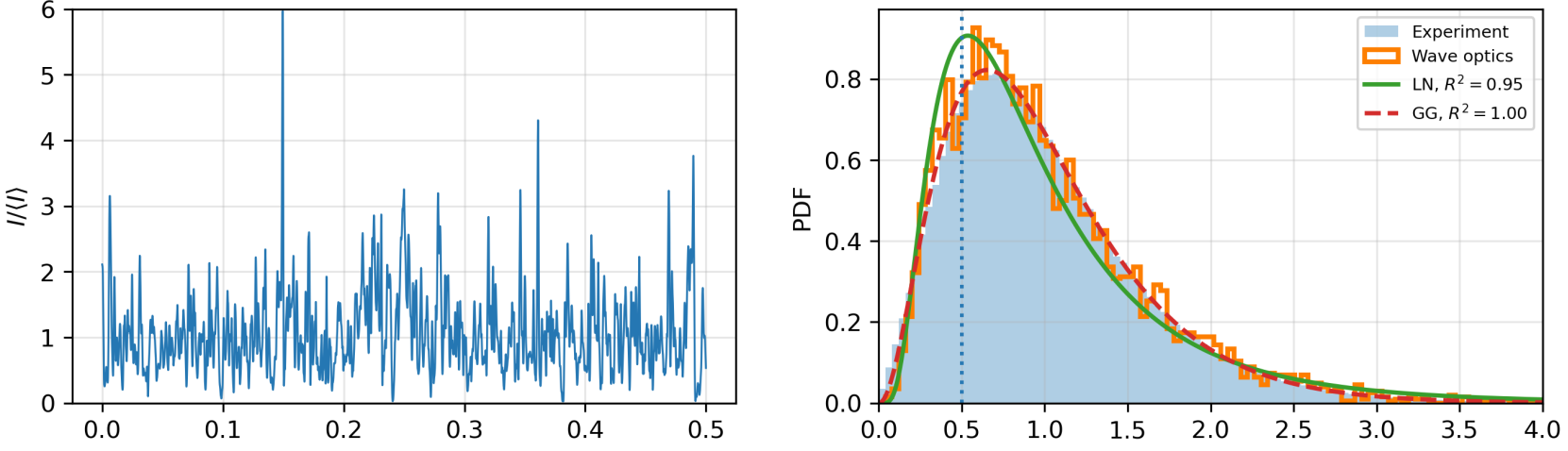
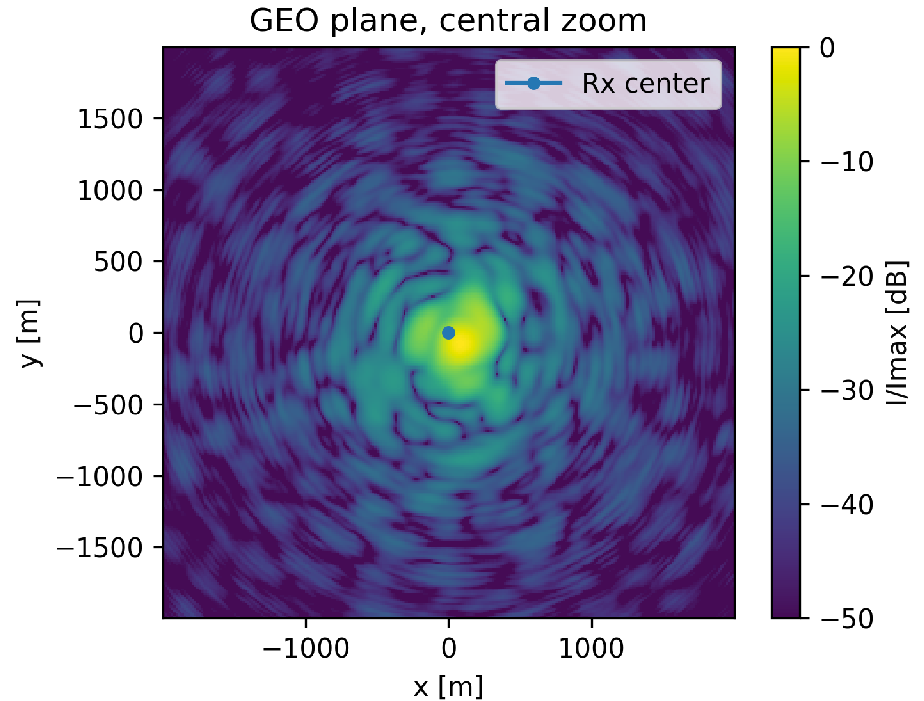
WOCLab has strong expertise in the modelling, characterization and performance analysis of wireless optical communication channels affected by turbulence, scattering, absorption, beam wander and pointing errors.
This research line covers both atmospheric free-space optical links and underwater optical wireless communication channels, combining analytical modelling, statistical characterization, numerical simulation and experimental validation.
The group works on statistical channel models, outage and BER performance analysis, aperture averaging, spatial diversity, adaptive optics and controlled channel emulation for challenging optical propagation environments.
Main capabilities include:
- Statistical channel modelling
- BER, outage and capacity analysis
- Aperture averaging and spatial diversity
- Adaptive optics and mitigation techniques
- Numerical wave-optics simulation
Experimental Platforms
A distinctive feature of WOCLab is the development and use of experimental platforms for controlled wireless optical communication research.
Our laboratory infrastructure supports the implementation and validation of end-to-end wireless optical communication systems in realistic laboratory conditions.
Main capabilities include:
- Optical transmitters and receivers for experimental validation.
- FPGA/RFSoC-based real-time prototyping.
- Controlled laboratory validation of optical links.
- Instrumentation for optical source, detector and embedded processing experiments.
Channel Emulation and Underwater Testbeds
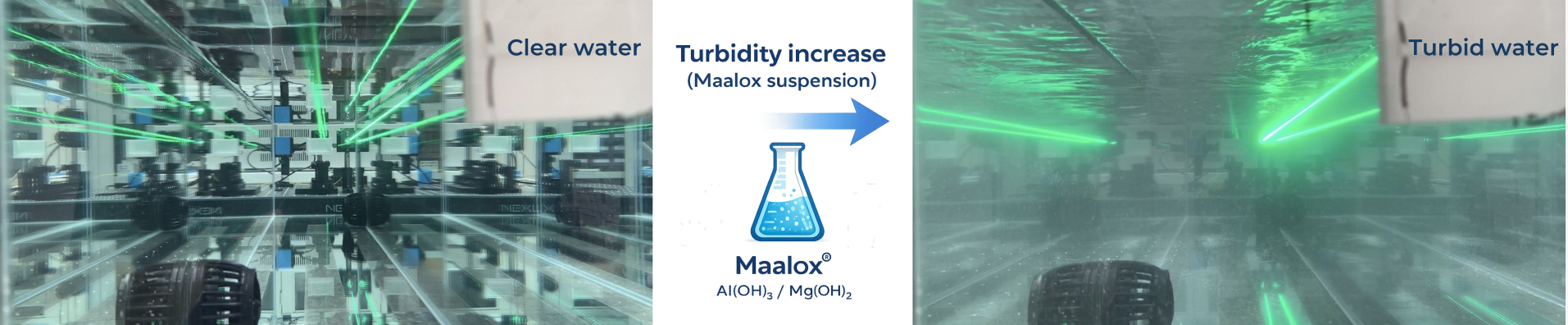
WOCLab develops experimental platforms for the emulation and characterization of atmospheric and underwater optical channels.
These testbeds enable repeatable experiments under controlled turbulence, scattering, turbidity and attenuation conditions, which are essential for understanding link degradation and validating communication strategies.
Main topics include:
Optical channel emulation for atmospheric and underwater wireless optical links.
Atmospheric turbulence chamber experiments.
Underwater optical water-tank testbed.
Turbidity, scattering and air-bubble-induced fading experiments.
Dynamic channel characterization under controlled attenuation and scattering conditions.
End-to-end validation of optical wireless communication strategies.
FPGA and Embedded Optical Communication Systems
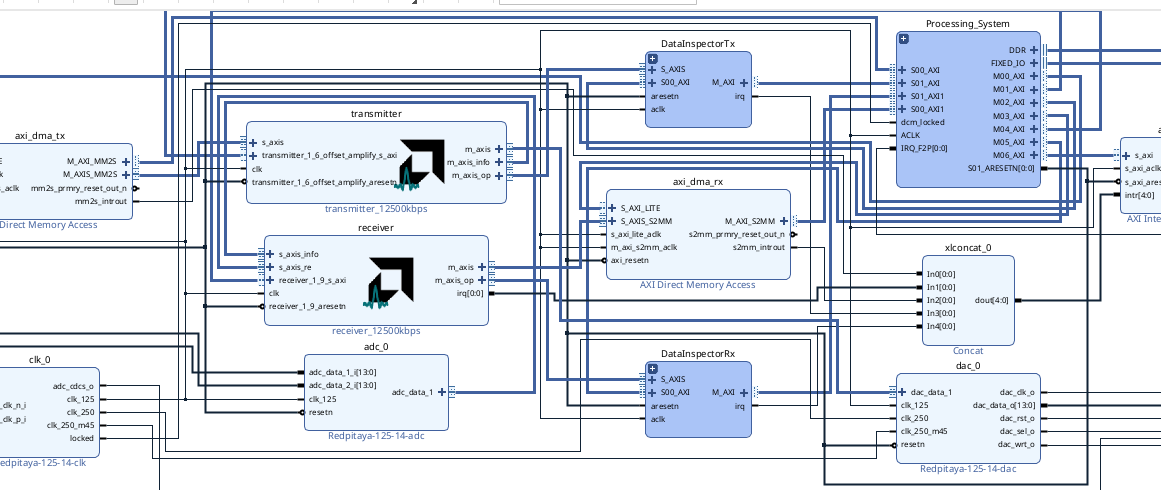
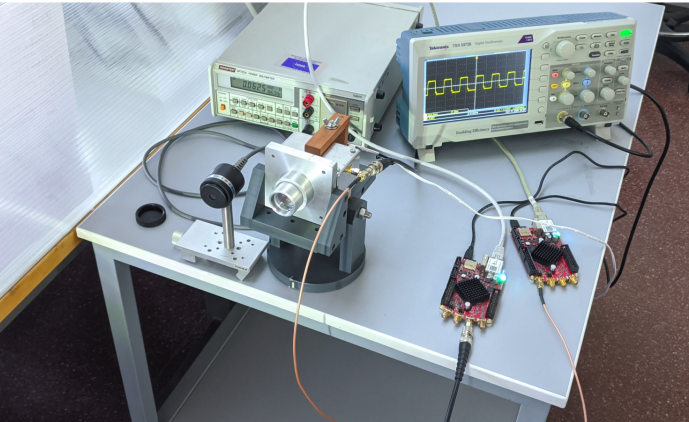
WOCLab develops real-time optical wireless communication prototypes using FPGA, RFSoC and embedded signal-processing platforms.
This research line focuses on the implementation of physical-layer algorithms for optical wireless links, including signal generation, acquisition, synchronization, modulation, demodulation, performance monitoring and hardware-in-the-loop validation.
Main topics include:
- Xilinx RFSoC, Zynq and FPGA-based platforms.
- Real-time signal processing for optical wireless links.
- Hardware/software co-design for experimental communication systems.
- Embedded implementation of physical-layer algorithms.
- End-to-end validation of optical communication architectures.
AI for Optical Wireless Networks
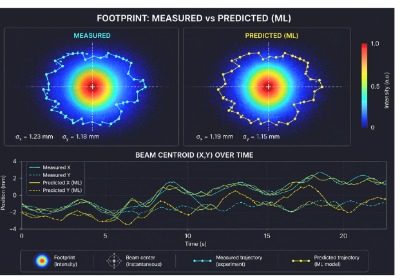
WOCLab explores the use of artificial intelligence and machine learning to monitor, predict and adapt optical wireless communication links.
This research line combines physical-layer measurements, channel statistics and system-performance indicators with data-driven techniques for channel-state assessment, turbulence estimation, beam-wander prediction, outage prediction and adaptive optical link control.
Main topics include:
- Optical channel prediction and classification.
- Machine-learning-based turbulence and scattering estimation.
- Beam-wander and misalignment prediction.
- Adaptive modulation, coding and threshold control.
- AI-assisted resilient optical network operation.
Research Capabilities
Experimental and computational capabilities supporting WOCLab research.
FPGA-based platforms for real-time implementation of physical-layer and link-layer algorithms.
Advanced testbeds to emulate atmospheric and underwater optical channels with high realism.
AI and machine-learning techniques for self-adaptive and resilient optical links.
Enabling Applications for 6G and Beyond
WOCLab research contributes to future 6G and beyond communication scenarios where optical wireless technologies can complement radio-frequency systems.
Target applications include:
- Beyond-RF communications.
- Smart cities and indoor optical connectivity.
- Aerial and satellite optical links.
- Underwater networks.
- Resilient links for harsh environments.
- Industrial and smart mobility scenarios.
- Photonic communication platforms for next-generation network architectures.